5:30am the alarm sounds. The sun is hours from rising and it’s -17C outside. Ali, Logan, Dan and I pile our snowshoes, trekking poles, packs, rifle, tarps, knives, warm clothes and two dogs into the back of Ali’s truck by the light of our headlamps.
A couple of hours out of town we scout some bison habitat – flat, open slopes near lakes. Logan is Ali’s partner and new to the Yukon. She tells him not to get too excited about the day — that the chances are pretty slim that we’ll spot any bison, let alone shoot one on a day trip. Hunters spend days or weeks in the backcountry and sometimes still don’t see anything. I read in the hunting regulations that only 24% of hunters with a moose permit harvested an animal in 2013. Scanning the mountains through binoculars we chat about hunting.
For Dan hunting means taking his survival into his own hands, and feeling connected to his source of food. It’s this perspective that intrigues me and draws me to the experience. For more than ten years I’ve considered Vegetarianism to be not only my diet, but my worldview. It’s a way to peacefully coexist with other living beings that I don’t need to eat to be healthy. I gave up meat originally because I’m disgusted by the cruelty and waste of factory farming. The more I research, however, the more I realize that many food systems take a toll on the planet. I don’t have an easy answer as to whether respectful hunting is better or worse for the environment than supporting massive monoculture fields of quinoa in third-world countries that exploit animal habitats and local people. Hunting in the wild can be a way to reconnect with nature. It’s a small glimpse into how the rest of the natural world lives in tune with the rhythm of seasonal migrations. For some, it can also be seen as empowering. Most people don’t know how to fix their cars, bikes, houses or clothing, or how to harvest their own food. Since moving to the Yukon, I’ve sampled wild meat, and now I want to understand where my food comes from. I want to get my hands dirty.
Around 1pm we find a promising-looking ridge and scramble up to get a better view. Ali spots a group of about eight bison grazing on a neighbouring slope, giant and prehistoric-looking. Quietly, we climb down to get a bit closer. Dan inches ahead with his rifle ready, motioning for the rest of us stay put. He lines up a shot as the bison become agitated and shuffle further up the ridge. Afraid to lose his chance, Dan fires once. Twice. His rifle jams. The bison scatter. We climb to where the bison were standing to check the snow for blood or for a lagging, injured animal. Everything is clear; none of the animals were harmed.
The bison tracks lead us over ridge after snowy ridge, through the pines, following a chain of small lakes, but we don’t catch up to the herd. On the way back to the truck Dan comments, “It would be a completely different afternoon if I didn’t miss that shot.” He feels the pressure of the group depending on that opportunity, and he’s upset about the lost chance. Further down the road we pass two huge trucks with expensive-looking snow machines on trailers, driven by tall men dressed all in camo.
Heading back in the direction of town around 6:00pm, we see a group of bison standing at a small lake visible from the road. Dan hops out, walking softly down to the lake. A big part of me is thinking – no no no! He fires once. Twice. Both bullets pierce the heart and lungs area of a small male bison, about a year old.
Ali and Logan can barely contain their excitement, bounding out of the truck towards the scene. The bison is lying alone, the others have scattered. I feel sad for the woolly bison and how afraid he must be. Cautiously we move closer to deliver the killing shot. His back legs and tail still twitch and he moans and snorts softly. Dan fires the final shot to the head and all sound and movement stops.
We name him Little Buck. It’s the closest I’ve ever been to a wild animal and I touch his bushy coat. Bison fur is so thick that they can walk around for weeks with a pile of snow on their backs—the fur provides so much insulation that the snow doesn’t warm to melting point. Back at the truck we gather tarps, knives, and gloves into plastic sleds. The other trucks we’d passed earlier slow to chat as they drive by – they’d heard the shots fired. One man in the group is a guide who’s been paid to bring the camo men hunting. He follows us to the small lake and watches as we carefully separate the hide to preserve it whole, and offers Logan one of his sharp knives. Logan begins with one side, cutting around the ankles and up the legs, separating skin from muscle, slicing the gooey membrane. The sun slopes in the sky but still throws enough warmth and golden light.
I’m skittish at first and the others don’t pressure me to dive in. Ali’s dog, Baffin, is fascinated by the process and we struggle to keep his nose out of the meat. Elsie, a younger pup, is terrified. She yelps and shakes at the smell of death, and Logan takes her back to the truck.
The sun creeps towards the horizon as we work away, sawing through muscle. Dan, the most experienced hunter in the group, handles the tricky bits like the stomach, bladder and bowels — everything we want to keep intact so that it won’t spoil the meat. He separates the back and front legs on the left side and lays them on the tarp in game bags. The bison is then rolled over to remove the other two legs, his body resting on the hide we’d separated to protect it from the ground. Then come the other cuts of meat, and the back strap is sawed off the bone. Ali and I build a fire as the temperature drops rapidly.
The stench of the animal becomes overpowering, but we’ve done a good job of cutting the bison open before he becomes too bloated, with no wrong incisions. Finally, it doesn’t look like a bison any longer. It’s an interesting anatomy lesson. Logan separates the head and cuts into the jaw which we have to present to Environment Yukon to report our kill. Twilight passes into darkness and Ali lights her camp lantern. The work proceeds by the eerie flame and the dying embers of the fire; all our snow gear is smeared with blood. Dan removes meat from the ribs with a sharp knife, the rib bones glowing red in the fire and torchlight, creating a primal scene. It’s extremely cold and dark by the time we finish. Fingers become numb when removed from the warm, fresh meat of the carcass. We drag heavy game bags full of legs, heart, kidneys, back strap, and the hide in plastic sleds to the truck. It’s after midnight when we get back to town.
The next day Dan and I arrive at Ali and Logan’s cabin to cut up all the meat and sort it into bowls – steak, stew, and hamburger. The legs are hung from the ceiling in the back room. We roll up our sleeves and get our hands dirty processing the meat. We drink tea and listen to music on the record player while we pack everything in butcher’s paper, labeled “Little Buck 2014” with a sharpie. Fresh bison steaks for dinner.
Overall I’m thankful for the amazing life experience of field dressing a wild animal. I thought about Little Buck every time I cooked the meat and was careful never to waste a scrap. I’ve been hunting with friends since then and spent many hours in the cold — planning, watching, waiting and calling moose — with no success. It’s a long, tough process, not for the faint of heart. Generally I still have that same feeling when we spot a wild animal while hunting – no no no!! I don’t want it to die. It makes sense for cultures in this part of the world to adapt to rely on meat to survive the harsh northern winters, and I respect that. For me, however, I still don’t feel that it’s necessary for me to take another life to survive, and I doubt I’ll be actively involved in hunting again. At potlucks I gratefully accept wild game which was hunted and prepared by my friends, but I’ll probably stick to harvesting wild berries myself.


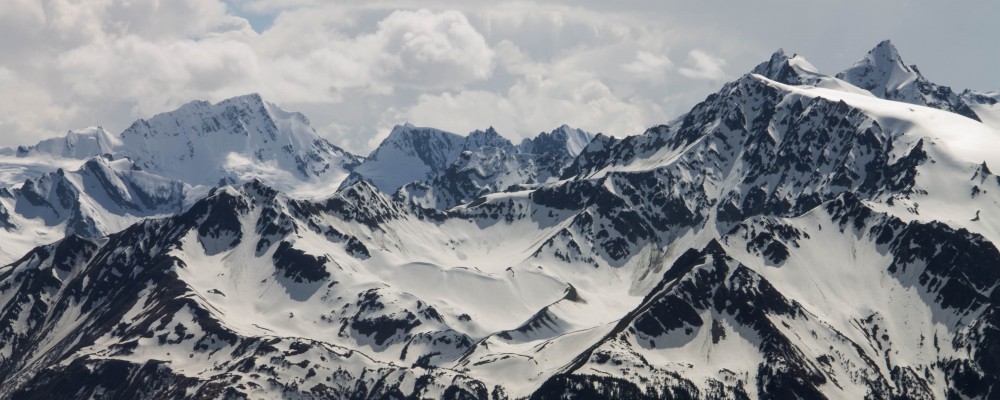
 roads and mountains
Wow, your wiring is so descriptive and spot on. I’d forgotten many of the little details and you captured them so well it took me right back there. Great writing, and great photos too 🙂